

Agenda, November 19
Budget 2026
The 2026 budget process is now underway. Over the next 4-5 months, staff and Council will complete a detailed review of all of HRM’s plans for 2026. Unfortunately, this is looking like a very challenging year. This will be my 11th municipal budget and one thing that time has shown me is that budgeting is always hard. It’s never an easy process and the choices are often difficult. This year though, seems to shaping up to be more challenging than ever. Difficult decisions lie ahead!
The source of the difficulty is HRM’s finances are becoming increasingly stretched by costs that are rising faster than revenue while, at the same time, the costs of accommodating all the new growth is threatening to drive up HRM’s debt levels. Debt ultimately impacts the tax rate once payments begin (HRM can’t legally run an operating deficit, but we can borrow for capital projects). It’s a perfect storm and the result is to just keep doing what we’re doing now, HRM needs to find $88.9 million in either new revenue or cuts. What this means is that the starting place for budget deliberations is an increase for the average home of 10.5% (combined impact of assessment and tax rate), which in real terms would be approximately $276 more a year. That’s a big ask that people will notice. Unfortunately, the alternative is cuts that people will also notice. There is no way to make up 10.5% without significantly impacting services. It’s very much a no win situation.
But wait you might say. “There are cranes everywhere. Isn’t all the new development adding to the tax base?” Yes, but not enough to offset increasing costs. HRM is projecting $6.8 million in new revenue due to new development, which is nice, but that still leaves a hole of $82.1 million! Also on the positive side of the ledger, HRM offloading the cost of recycling though extended producer responsibility and staff have been able to build in some efficiencies in staffing and in fleet vehicle management. None of that offsets the fact that salaries, inflation, and contracts are up by $56 million.
It should be noted that some of the rising costs that Council is facing are the result of our own decisions. Last year, Council approved hiring 14 additional RCMP officers and now the full year cost of those officers is hitting the budget. Council also spent savings last year to keep the tax rate flat, and the problem with spending savings is that once they’re gone, they’re gone! Keeping the tax rate artificially low last year by depleting the Central Library Reserve has deepened the hole we have to dig out of this year. Also of note, a few months ago, Council approved a lease for new library support space that hadn’t been budgeted for. It’s an opportunity that arose mid-year that will enhance the Libraries’s capabilities and allow them to use their existing branches more efficiently, but it does come with unplanned for extra costs. Decisions like these add up to $40 million in pressure.
So what do we do? Well for starters this is obviously not a great year for new initiatives or service expansion! This year is about choosing a poison or, more likely, a mix of poisons. Tax or cut deeply. There isn’t some magical third option that will let us have all the services and projects that people want and need without paying for them. As Mayor Quimby said when Springfield was in a budget crunch, “those garbage men won’t work for free!”
We pay for what we decide is important, or we do without. That will be Council’s tough decision-making over the next 4-5 months.
Budget Direction
So what did happen to set the stage for the coming debate? Staff were looking for direction on potential service enhancements that could be built into the budget. Council did move a couple of the suggested items forward and the result is 10.5% edged up to 10.9%. The mood that this isn’t a normal budget year was palatable as a lot of items that would have passed easily in others years were turned down including more firefighters, more RCMP officers, and more security at transit terminals (Mumford and Scotia Square). Those items might still come back during department presentations as there are folks on Council who feel strongly about all of them, but Council voted not to build them into the budget at this time (I voted for the transit security, but not the more hefty asks from police and fire). Most of what Council did add is stuff that is classified as a service enhancement, but was really about holding onto what we already have:
Services Enhancements
Risk Reserve:
The biggest added item was to put $3,000,000 more into HRM’s savings accounts to rebuild the risk reserve. HRM’s reserve has been depleted and the major risk here is that if disaster strikes, HRM won’t have the savings to pay for all the unplanned for costs. It’s true that the provincial and federal governments do compensate municipalities for disasters, but getting reimbursed takes years. Payments for Hurricane Juan took over a decade to arrive. It’s a broken system that forces HRM and other municipalities to pay upfront and hope to get some unknown amount back much later. Over the last couple of years we’ve had fires, droughts, hurricanes, and floods and the reserve is low. We could keep taxes low and gamble that there will be no catastrophes anytime soon, but that doesn’t feel like a very prudent course of action! Council opted to start topping up the reserve 10-6. I voted in favour.

Community Safety:
Council voted to build in an additional $198,300 for the Community Safety department to replace expiring federal funding. The federal government likes to fund projects, but they’re rarely around for long-term sustainable funding, which always leaves municipalities in a bind when programs expire. The federal grant in this case is expiring and so to just keep doing what we’re already doing in Community Safety requires additional funding. Without this funding, community training and work with the homeless would suffer and HRM would struggle to meaningfully advance the Public Safety Strategy. Council voted to top up funding to Community Safety 11-5. I voted in favour.
Culture and Communities:
Council approved an additional $135,000 for one staff person in Culture and Communities and a partnership with the Association of Nova Scotia Museums (ANSM) and Council of Nova Scotia Archives to strengthen capacity in the museum sector. HRM is preparing to move the Dartmouth museum collection from its current warehouse space into new space alongside the Public Archives in 2027, but that move won’t be possible if there isn’t someone dedicated to preparing the collection. This will also ensure that the slow work on the Museum Strategy continues. Council voted 10-6 to fund the museum strategy. I voted in favour.

Parks Enhancements:
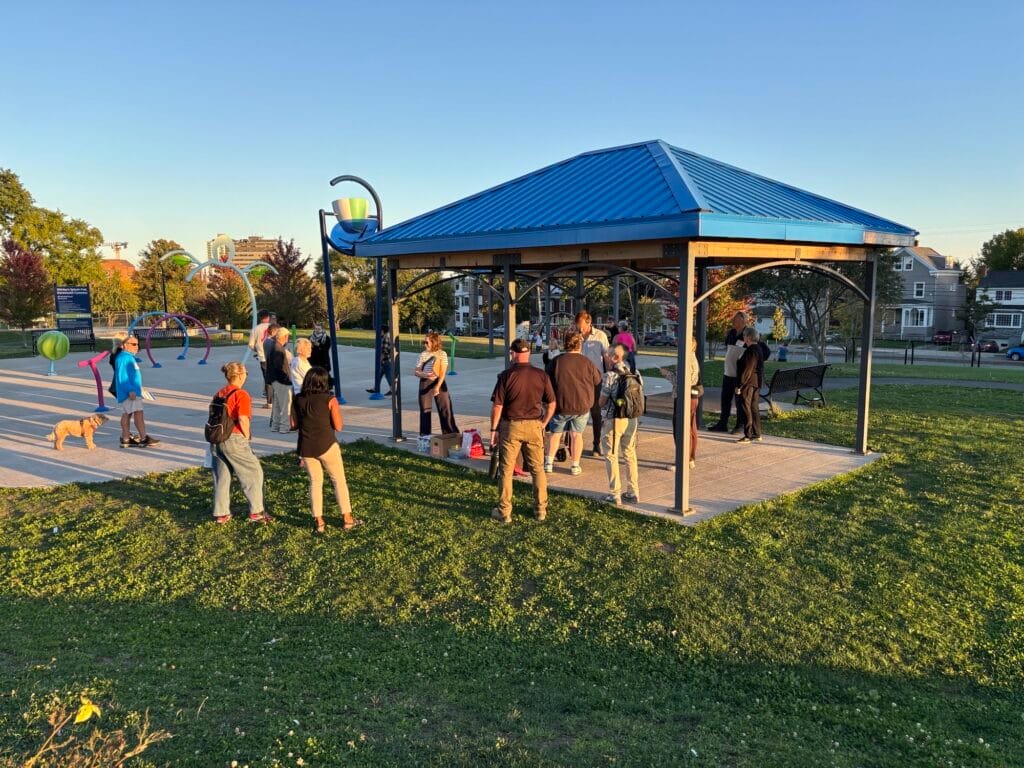
Council approved $205,000 for some minor improvements in Parks and Rec service. The main one for District 5 is that security staffing that was added to Shirley’s Splash Pad this summer after several incidents involving drug paraphernalia being left at the Pad will continue next year. Funding will also go to cover the rising cost of providing port-a-potties at various locations and some additional lifeguard training and staffing at rural beaches. Other than the rural beach component, it’s hard to see making sure the splash pad is safe to use and that we keep providing port-a-potties as much of an enhancement in service! More holding onto what we already have. Council voted 15-1 in favour of building in the parks enchancements. Mayor Fillmore was the only no vote.
Volunteer Firefighter Recruitment
Council didn’t opt to add additional firefighters at this time, but we did approve the addition of one dedicated staff person to manage support and recruitment for volunteer firefighters. The cost of that position is $53,400. Council voted 14-2 to enhance volunteer firefighting recruitment. I voted in favour.
RCMP Officers
The RCMP were requesting nine new officers this year. Six of them would staff a new community policing office in Eastern Passage, two would be dedicated to investigating intimate partner violence, and the last would be for the RCMP’s Community Action Response Team. The cost of the RCMP officers would be just under a million, but as Council is feeling this year, adding staff really bits the year after when the full cost has to be absorbed. The full cost of the RCMP ask next year would be just shy of $2,000,000. Council supported adding the two Intimate Partner Violence investigators, but turned down the CART and Eastern Passage Community Office. Councillor Kent tried her best, but the sentiment around the room was that the Eastern Passage Office could wait a year or two. Council voted 13-3 to add the Intimate Partner Violence investigators and then 7-9 against the Eastern Passage Community Office. I voted with the majority on each.

Cuts:
Public Wifi
Council did partially make up some of the cost of the minor service enhancements by voting to scrap the public wifi program as of April 1. HRM’s public wifi program provides free internet access at Grand Parade, the Halifax and Dartmouth waterfronts, Alderney Landing, the Oval, Public Gardens, and several bus terminals. Usage of the public wifi service has declined significantly over the last several years (declined by half) and the contract is up for renewal in April. I have been around long enough now that I recall when HRM launched the publci wifi program back in 2017. I actually voted against it then as I felt what we were getting for the cost was just not very compelling. Scrapping the program will save $450,000. Free public wifi will still be available at HRM libraries. Council voted 14-1 to scrap public wifi. I voted in favour of the cut.
Green Bins
Council opted, however, not to move forward with the other potential cut, scaling back summer green bin service. Moving to biweekly pickup in the summer has been something that Council has tried twice now, once entirely, and this past summer, a shortened season that started later in July and ended earlier in September. Both times that Council has adjusted green cart pick up the result has been lots of complaints. It’s a cut that many folks don’t want and so this year we’re not going there. The Mayor moved to build in reductions to Green Bin pick up, but Council turned him down 10-5. I voted against cutting the service. Green bins are good illustration of the whole challenge of cutting services. What is unimportant to one person really matters to someone else. There is no consensus out there on what is essential and what isn’t.

The result of Council’s direction is the starting point for the average tax bill is 10.9% instead of 10.5%, or, in real terms, Council added $11.08 more to the potential bill for the average homeowner. Adding to the risk reserve accounts for most of that. Excluding the risk reserve, Council added $0.31 to the average bill to start off budget deliberations.
The Mayor’s Motion:
The last major item was an amendment moved by Mayor Fillmore. The Mayor’s motion is to keep the tax rate flat by:
- Proposed reductions in services
- Review capital renewal spending
- Reduce contribution agreements and grants funding
- Increase fines and user fees
- Review staffing levels
- Review previous Council decisions that have not yet been operationalized
- 10% cut to program grants
- Freeze contribution agreements with external parties
- Reduce the Climate Action Tax by 1/3
- Cost/benefits of a hiring freeze
A staff response with details and implications for proceeding as the Mayor suggests will come back during budget deliberations in the New Year. Basically, the Mayor is providing options for Council to consider.
I can appreciate that the Mayor is trying to keep a flat tax rate promise, but there is a reason why I didn’t make any such promise myself! The problem with cuts is it takes a whole lot of them to add up to anything significant. Summer green bins is a great example: cutting summer green bin pickup would save the average homeowner $3.77 a year. The problem for the Mayor and folks who prioritize low taxes as the most important thing is that taxes are an efficient way to pay for services and keeping them low involves a whole lot of cutting. It’s not one cut and you’re balanced, you need a whole whack of them. Some quick and dirty math. To get to a flat rate where HRM pockets the gains from assessment, but doesn’t increase the rate as the Mayor wants will require getting the average tax bill down from $276 to $97…. There is a whole lot of potential green bin type cuts in that $178 difference!
There are likely measures that will come back from the Mayor’s motion that I will support (I already voted not to add RCMP officers, firefighters, and to scrap public wifi), but the reality of much of what he is suggesting will be grim. Cutting grants to already struggling non-profits, slashing services, abandoning work on climate change isn’t a vision for HRM that I support. It’s not what I have campaigned on, it wasn’t part of my platform, and anyone who has followed my decisions/blog over the years will know that’s not what I’m about. I don’t love that taxes are set to rise significantly, more than in any other budget since I was elected, but I expect the alternative will, in many ways, be even worse, much like it was the last time Council went down this road in 2023. It will be a rough few months at City Hall in the New Year!
I encourage folks to follow this closely and offer your input along the way. Every budget meeting has the opportunity for the public to offer feedback to Council and new this year we will have an evening session for folks who can’t join us during the usual 9:30 start time! Here’s the budget schedule.
- Deccember 9, 2025 – Capital Program Update and Advanced Tenders Report
- January 27 , 2026 – Special evening public participation session (6 p.m., following Regional Council)
- January 28 & 30, 2026 – Capital Plan Recommendation (Reserve Withdrawals, Multi-Year Projects)
- February 4 to 6, 2026 – Operations Budget Presentations (Major Projects Office, Parks & Recreation, Planning & Development, Public Works, Strategic Infrastructure & Transportation Planning, Halifax Transit, Property, Fleet & Environment)
- February 11 to 13, 2026 – Public Safety Budget Presentations (Community Safety, Halifax Regional Fire & Emergency, Halifax Regional Police, RCMP Halifax Regional Detachment)
- February 18 & 19, 2026 – Corporate Services & Other Budget Presentations (Office of the CAO, Finance & Asset Management, Human Resources, Information Technology, Legal & Legislative Services, Auditor General, Halifax Public Library, Fiscal Services, Office of the Mayor)
- March 4 & 6, 2026 – Budget Adjustment List debate
- March 31, 2026 – 2026/27 Municipal Budget and Business Plan approval

Roads cost $86m last year, and we’re expecting $111m this year. That is TOO MUCH!
We are spending too much on new road infrastructure: repairs only!
Stop spending on new roads for just ONE year and you will balance the books without cutting ANY services.
Then see what the taxpayers think!
I would like a clearer understanding of the motion put forward and approved, I believe, to look at all approved budgeted capital expenditures where a contract has not been signed. I hope I have that right? We have spent many millions on the Cogswell exchange and the Province has “forced” us to plan on spending many millions more on Windsor Street exchange. Meanwhile our not cheap project in Dartmouth, shared by Halifax Water, Sawmill Creek day lightning, appears to be dangling out there. It has been postponed once before and now part two of phase two hasn’t even gone to tender even though that was to have happened last spring. Specifically is this in danger of being cancelled? Can you tell us what your thoughts are on this.