


Agenda, October 28
Museum Strategy
The Regional Museum Strategy was before Council last week. HRM has been considering two different approaches towards the museum question, (1) create a new Regional Museum that would be the central hub in HRM or (2) a decentralized approach that sees HRM enhance support to existing community run museums. There are pros and cons to each option. A new Regional Museum would fill gaps, but it might also threaten to supplant work that is already happening in the community through the various community museums. It would also be a major expense. Enhancing supports for community museums would cost a lot less and wouldn’t require the creation of a new HRM institution, but it also means that some history will continue to fall through the gaps. Community museums can’t entirely fill the role that a civic museum would. Staff recommended to enhance supports for the existing network of community museums and not create a new HRM museum at this time. Council accepted that recommendation unanimously.
The museum question is really important in Dartmouth and, ultimately, either option can work for our community. The museum issue matters in Dartmouth because, unlike the other municipalities that made up pre-amalgamation HRM, the City of Dartmouth had a municipal museum. None of the others did. Dartmouth’s museum was created as a centennial project and HRM inherited the museum, its properties, and its collection with amalgamation.
Unfortunately, amalgamation hasn’t been very kind to Dartmouth’s museum. The museum building on the Common was condemned and demolished in 2002 and the bulk of the Dartmouth collection has been in storage and unavailable to the public ever since. HRM has contracted with the Dartmouth Heritage Museum Society to manage Evergreen and Quaker Houses and the Dartmouth collection. The Society does good work, but those efforts can’t paper over the fact that resources have been inadequate over the years and the Dartmouth collection doesn’t have a proper exhibit space. Evergreen House and Quaker House are beautiful historic houses that we’re lucky to have, but they aren’t exhibit spaces. Exhibits at Evergreen take place in rooms that were meant to be bedrooms and that comes with obvious limitations around what can be exhibited and on basic access since Evergreen isn’t an accessible building. Evergreen and Quaker should be period house museums and the Dartmouth collection that doesn’t relate to either home should have a proper modern space to be displayed in. Asking Evergreen to be both Helen Creighton period house and exhibit space isn’t a satisfactory long-term solution.
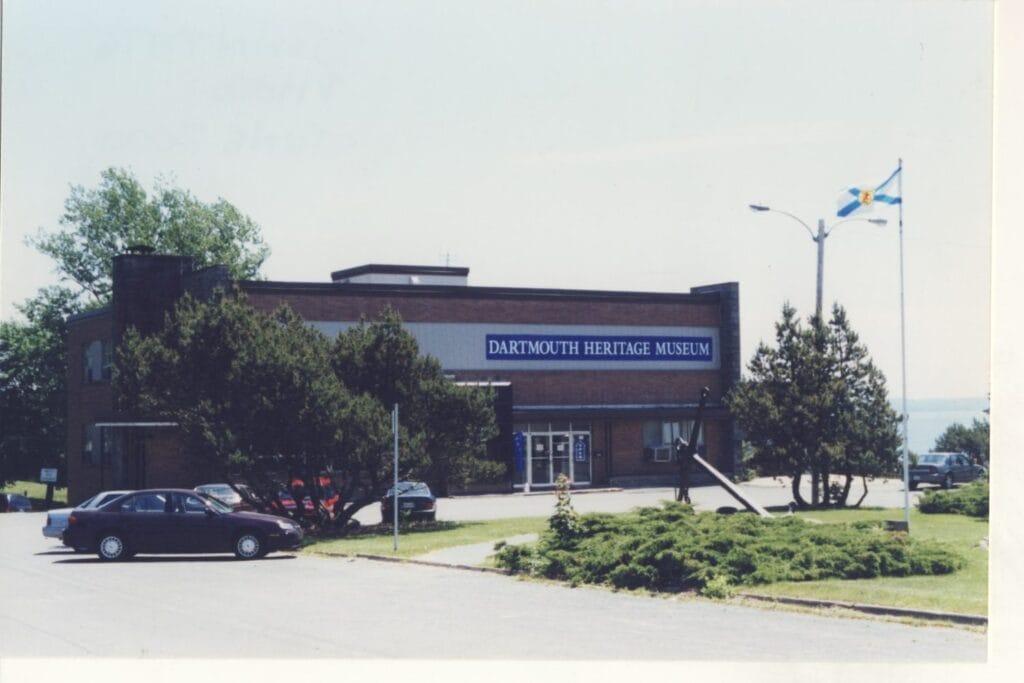
After 2002, there was a one-off effort to find a new home for the Dartmouth collection when HRM considered the potential reuse of Dartmouth’s Old City Hall on Alderney as a museum space. It was before my time on Council, but the analysis of Old City Hall ultimately revealed that the building wasn’t suitable for reuse as a museum. Councillor McCluskey was successful in getting the money from the sale of Old City Hall put aside in a reserve for a new museum, but from 2002 to 2019, no real planning work was done on what HRM actually wants and needs in a museum project. It takes years to create or expand public institutions and that work only started in 2019 when Phase 1 of the Regional Museum Strategy got underway. Phase 1 inventoried HRM’s existing assets and put off definitive recommendations until Phase 2. Phase 2 has now answered the question of what approach HRM is going to take, and it’s the decentralized model: HRM isn’t going to be building a new civic museum.
From the getgo, I have been clear with staff that I can work with either approach, but that if HRM is going to go with a decentralized model, the Dartmouth collection will still need a proper exhibition space. The collection belongs to HRM and it’s HRM’s responsibility to manage and care for it. HRM can’t walk away from that and it’s up to HRM to restore what was lost when the old museum building was torn down in 2002.
While staff acknowledged in the Phase 2 report that the Dartmouth collection doesn’t have a proper home and that that’s a problem, there was no solid recommendation as to what to do about that. The staff report referenced future planning, such as the the Waterfront Plan, or refurbishments at Alderney Gate, as opportunities to look at the museum collection. I didn’t agree with this approach.
We aren’t going to get a new home for the Dartmouth collection just by hoping that it can be tacked onto some other unrelated project. That’s not how new institutions get created, that’s not how existing ones get expanded. We’re not going to solve the Dartmouth collection issue without some more specific planning. To me, the staff recommendation was a way of acknowledging the problem without actually committing to doing anything. That wasn’t an approach I could accept.
In talking over alternative options with staff, what we identified as a way to keep advancing progress is the HRM Venue Plan. The Venue Plan is scheduled to get rolling next year (if Council funds it) and it will specifically look at HRM’s cultural spaces. A cultural spaces plan is a good spot for the museum question to fit! So I moved an amendment to direct staff to look at the feasibility of new exhibit space for the Dartmouth collection as part of the Venue Plan. It’s too early to say exactly what options might be available for the Dartmouth collection, but in talking to staff, space in Alderney, redeveloping HRM’s vacant parking lots at the corner of Alderney and Ochterloney, potentially partnering in redevelopment of derelict industrial lands in the Dartmouth Cove area, or an addition to Evergreen House are all options that could be considered. Lots more work is required.
I know Dartmouth has been without a proper home for the Dartmouth collection for a while and I wish there was a way to shortcut all the planning work that needs to happen, or to get back all the time that was wasted in those years following amalgamation, but there isn’t and even if there was, HRM doesn’t have the money right now to build a new museum. My goal right now is to keep the planning process for a new museum space moving forward so that, if and when conditions change, HRM will be in position to finally restore this piece of Dartmouth’s story that has been long missing. We need to get to an actual plan of what we want before we can hope to tap into federal or provincial infrastructure programs that might solve the money problem.
Restoration Evergreen and Quaker Houses
One final note on the museum recommendations, staff also recommended that the approximately $2,400,000 set aside for a future museum project be instead used to carry out repairs to HRM’s historic houses, with top priority given to Evergreen and Quaker. I support this approach. Evergreen and Quaker both need work and it has been a struggle to get things done and at scale at both property. Evergreen recently suffered a water leak that did a bunch of damage and took far too long to address. $2,400,000 isn’t enough to build a new museum so there was always going to have to be a bigger budget commitment. Spending this money now to fix the heritage that we already have feels like a more sensible approach. Hopefully this will mean some substantial work will take place at both properties in 2026!

HalifACT Update
Council received a yearly update on HalifACT, which was a mix of good and bad news. The good news is that HRM has really turned the corner in a lot of areas. There is actual real-world progress being made to implement HalifACT and a lot of that is because Council dedicated funds to the plan and through various budget cycles, has voted to provide the staffing needed to do the work. This is evident in areas as varied as retrofitting HRM buildings, expanding EV charging equipment and electrifying HRM’s fleet, adopting nature-based solutions, expanding environmental programs such as watershed planning and naturalization, and expanding community energy initiatives like Solar City and the upcoming home retrofit program. About half the HalifACT action items staff assess as on track, which has steadily improved over the years. I’m proud of the part I have played here in consistently advocating and pushing for HRM to do better and to actually fund and staff the work that’s needed. That’s the good news.
Unfortunately, the scope of HalifACT is massive and half of the action items are still identified as needing adjustment or at risk. Some of the items that are at risk are at risk because of factors that HRM can’t control. For example, to fully meet HalifACT’s targets, the Province needs to adopt more rigorous building code requirements related to energy consumption. HRM has requested the Province adopt the more rigorous code, but they have been unwilling to do so at the pace necessary to meet HalifACT’s goals. This isn’t an item HRM directly controls.
My main question to staff, therefore, was what should we be doing about the items that we could do better on that are within our control? Things like Solar City, which we should be scaling up if we’re going to progress on HalifACT’s rooftop solar targets. Solar City should be an offer that’s too good to refuse, but to make that happen will require HRM to put more money into the program to reduce the interest rate charged to participants or to allow for longer payback periods. In answering my question, staff in Environment and Climate Change actually had a very thoughtful answer about the work that’s underway now. Rather than HalifACT just being the responsibility for HRM’s Environment and Climate Change group, staff are working to embed the action items into all of HRM’s other departments so that responsibility to deliver is more keenly felt and identified. How successful this is will become evident early in the New Year when HRM’s various departments present their business plans for the year. How HalifACT is considered in relation to the parts of the plan that aren’t on track is something that I will be looking for.
Other
- Approved a variety of Remembrance Day fly pasts
- Received a presentation from the Halifax Regional Centre for Education on supplemental arts funding program
- Approved interim changes to HRM’s Asset Naming Policy while HRM sorts out how we’re going to handle commemorative names going forward and what to do about historical names that are controversial
- Allocated $20,000 to fund FireSmart intiatitives aimed at protecting properties from wildfires
- Directed a request for funding from the Prescott Group to HRM’s existing grant programs
- Amended the capital plan to account