


Agenda August 25
Pickle Ball in Dartmouth
I don’t think it’s news to anyone that pickleball has been exploding in popularity. A survey by Pickleball Canada from early 2025 suggests a 57% increase in play since 2020 with 1.5 million players in Canada. The challenge that comes from this is providing actual courts to play on. There are dedicated pickleball courts in Dartmouth at Morash Park and the Cole Harbour Common and play does happen in gyms, such as the North Woodside Community Centre and Sportsplex, but pickleball and tennis share a lot of court space in places like the Dartmouth Common, Northbrook Park, Brownlow, etc. Shared spaces stretch limited municipal funds, but shared courts also come with compromises for both tennis and pickleball players: tennis players don’t like the extra lines, while pickleball players don’t like the higher net. Further complicating things, pickleball is also a lot noisier than tennis, which means it generates noise complaints from neighbours in places that tennis doesn’t.
Dartmouth has its own pickleball association and they want to see the creation of a regional facility. Councillor Mancini requested a staff report in May 2025 to look at the idea and staff’s response was back before Council yesterday. After considering several potential parks, HRM staff identified Maybank Park on Micmac Boulevard and the Dartmouth Harbour East Recreation Campus in Burnside as the best potential sites for eight pickleball courts and one accessible pickleball court.

Although staff identified two possible locations, the reality of HRM’s current financial situation is municipal dollars are very scarce. Council went through a major exercise to right-size the capital budget earlier this year, which meant delaying many projects that have already been identified. There is a pressing need for better transportation options and several existing municipal assets, like the Forum and Police Headquarters are past their best-before date and need to be replaced. It’s a terrible time to pitch new projects! And so HRM staff aren’t recommending proceeding with a $2,000,000 regional pickleball project.
Council is, however, holding the door open for community involvement. Council approved an alternative motion to hold the Maybank and Dartmouth Harbour East spaces for five years to see if the Pickleball Association can fundraise for a project. There is precedent for this sort of approach. Community groups have pushed many projects into being such as both the splash pad and skateboard park on the Dartmouth Common and, recently, the all-weather field in Fall River.
Holding the space at Maybank for five years doesn’t have any immediate downside that I can see. The space at Maybank has no current use and the only thing that I have wondered about as a potential addition to Maybank is an off-leash dog space (the pitchers warm-up space at Maybank has consistently been used as an unofficial dog run, suggesting there is a need in the area). With pickleball being popular with older residents and given the demographic profile of all the nearby apartments, and all the growth that is envisioned at Micmac, Maybank seems like a really good fit for pickleball. The kind of amenity that would benefit with a ready population of nearby players.
Council approved the pickleball motion unanimously as part of the consent agenda. Serve returned to the Dartmouth Pickleball Association!

Six Ferries?
The topic of ferry reliability was back before Regional Council with the Mayor presenting a motion to direct staff to look at HRM potentially buying a sixth ferry. During peak hours, HRM needs four ferries to serve the Woodside and Alderney routes. The municipality has five ferries with the idea being that there is a spare ferry for when maintenance is needed. When one ferry is out for maintenance though, HRM has to operate without a spare. HRM’s five ferries all entered service between 2014-2018 and are hitting the point where mid-life work is needed. The ferry system has had a difficult few years as staffing shortages and, recently, maintenance challenges have disrupted service. Difficulties in getting replacement parts for the ferry’s proprietary steering system, notably, disrupted the 15 minute service on the Alderney route earlier this year for several months.
If HRM expects people to make public transit a core part of their lives, transit needs to be reliable. With no traffic congestion on the Harbour and very few days where the weather is so bad that ferry service is disrupted, the ferry should be the most reliable transportation option available. That it hasn’t been is, unfortunately, a reflection on HRM’s management of the service. It’s something we have to do better at. An operational review is underway and is expected to come to Council in the fall. So how does the Mayor’s motion fit?
The Mayor didn’t support my attempt to offer free fares when Alderney was running on a 30 minute schedule and has, generally, been opposed to adding anything to the budget, so I was a bit surprised that he brought forward a motion on the ferry that would cost several million (a ferry cost approximately $6,000,000 back in 2018 and would presumably be several million more in 2026).
I don’t know if we need a sixth ferry. What I do know is we have to do a lot better at managing the service and fleet that we have. I’m very much looking forward to the operational review, particularly what it has to suggest around maintenance of the fleet and staffing. I expect there will be additional costs to HRM to improve how the ferry service is operated. It might be that the Mayor is right and we need one more ferry, but it also could be that spending something like $8,000,000-$10,000,000 isn’t necessary if we do a better job of managing the fleet that we already have. The Mayor’s motion, to me, is premature so I suggested that his request for a report be paired with the operational review. The Mayor agreed and so the two will come back together, likely this fall. Having the operational review in hand is necessary before we can make any decisions around how many vessels we actually need and having the two paired together meant I was then comfortable voting yes on the Mayor’s proposal.
Council approved the Mayor’s motion 10-5 (Cuttell, Deagle-Gammon, Hartling, Morse, Steele voting No, White and Cleary away).

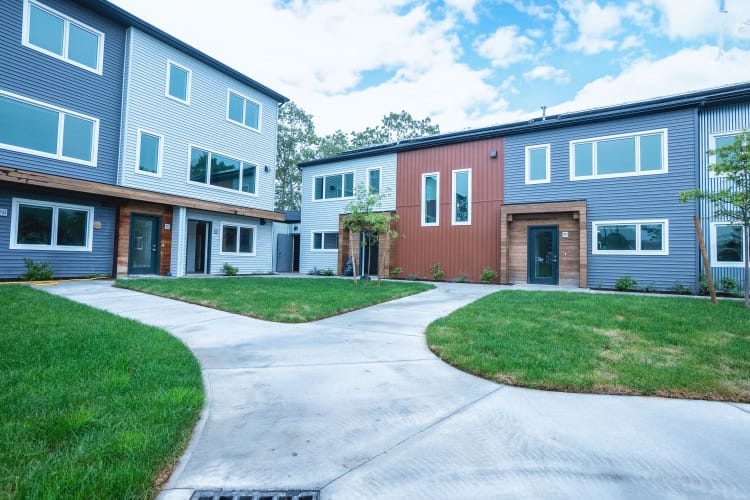
Affordable Housing Strategy
Council approved HRM’s new Affordable Housing Strategy. The Strategy was part of HRM’s proposal to the federal government to get funding through the Housing Accelerator Program. HRM has received just over $60,000,000 from Ottawa and the last $19,000,000 payment is contingent, in part, on this work being completed.
The Strategy is largely a “stay in your lane” approach to affordable housing. Housing is a shared space between all three orders of government, with the Feds providing most of the money, the Province having most of the direct jurisdiction for services, like shelters, supportive housing, and public housing, leaving municipalities in Nova Scotia with responsibility for land-use planning. Municipalities in some Provinces, like Ontario, directly provide public housing, but that isn’t the case here.
Over the last number of years, HRM has done a lot to provide support for housing initiatives within the municipality’s mandate. This has including forgiving permitting fees for affordable housing, removing zoning barriers, and providing direct grants funded through density bonusing. Council has also made a few one-off special grants to support specific projects and HRM continues to provide ongoing tax reductions to non-profit housing providers. HRM has also become way more involved in responding to homelessness than ever before and has launched a surplus land program.
The new Strategy commits HRM to maintaining the municipality’s existing programs and efforts as well as:
- Looking at the potential for affordable housing as part of the Cogswell redevelopment
- Undertaking a review of tax relief to non-profits
- Continue to reduce planning barriers
- Consider inclusionary zoning in very large site developments
- Consider the expansion of the density bonusing program beyond the Regional Centre,
Responsibility and delivery of housing programs has been spread throughout HRM’s staff. To actually properly administer all of this work, the Strategy proposes creating a core team of three people (two new hires, one existing staff). This part of the recommendation proved to be a bit more controversial for Council. The Mayor put forward an amendment that would have moved the additional staffing to the Budget Adjustment List, which would mean Council would have to vote yes to approving these positions in March.
The Mayor’s proposal didn’t make any sense to me. Approving a strategy and then not dedicating the resources to actually carry out the work is just lying to ourselves. If you don’t want to pay for the work, don’t approve the strategy. Voting for the one while voting against the other is saying something is important, and then treating it like it’s not. It feels hypocritical to me. The two additional planners to work on housing issues would cost just under $200,000 a year, which is 0.02% on the average tax bill. It’s essentially a rounding error in the municipal budget. There is no reason that HRM can’t do this, and this won’t affect what people pay in any way that impacts their lives or is remotely measurable or even noticeable, meanwhile the work that could be achieved on housing could absolutely make a difference. There is definitely a difference between having dedicated staff to work on something versus trying to load it onto other people! Asking someone to do something off the side of their desk versus it being their core responsibility are two very different things that produce very different outcomes! This is well under $1 a year for the average property owner on an issue that has been on top of everyone’s minds. It doesn’t make sense to me that we would adopt a strategy and then not actually properly staff it over such a tiny amount of money.
In fairness to several of my colleagues, a number of those who voted against building it into the budget weren’t necessarily opposed to hiring the staff, but just wanted to see these positions in context of the 2027-2028 budget. I disagree with the need for that in this instance, but I can understand the perspective. The Mayor and others have noted that HRM’s budget process, while transparent, is also very lengthy and so advice from staff has been that if we’re confident we want to do something, we should just direct staff to include it in the budget rather than filling up the Budget Adjustment List with items that Council is almost certainly going to approve in the end. This to me is one of those items and sending it to the Budget Adjustment List would just be adding process and procedure for no real value. A housing strategy without the people to do the work is just ticking a box. If we’re not going to resource this, we shouldn’t approve the strategy in the first place.
The Mayor’s amendment failed in a 8-8 tie vote (Myself, Cuttell, Deagle-Gammon, Hartling, Hinch, Kent, Morse and St. Amand voted no with White away). We then voted on this again as part of the main motion, but essentially in reverse with the question being whether to build it into the budget. Procedure and the play of who is in the room can yield funny results at times as the main budget motion actually passed 8-7. The two voting blocs flipped from no to yes, but remained the same. No one changed sides. There was no tie because Councillor Cleary had to step out. So the two additional staff will be built into the staff prepared draft budget. The strategy itself was approved unanimously 15-0.
Other
- Requested an update on HRM’s 2020 Washroom Strategy (it’s been 5 years, it’s a good time for a review of results and future projects)
- Approved a new framework for major events
- Deferred discussion of the Gorsebrook Park Tennis Dome proposal until a future meeting when the area councillor would be available and on new private road policies to allow Councillor Cuttell to further engage with staff and her community on the issue
- Transferred money with the HRM capital budget from the fire department radio replacement to the police radio replacement (police radios are in worse shape than fires!)
- Received a presentation on HRM’s Dismantling Racism and Hate Strategy
- Directed staff to create a new centralized reporting structure and system for HRM’s various grant programs
- Approved a number of names for private roads throughout HRM, renamed Garden Court in Montebello to Barry’s Run Court (Garden Court Terrace and Garden Court being both in Dartmouth and too similar to each other), and deferred renaming Lynwood Drive in Halifax for further review by staff once HRM’s new civic naming policy is complete
Thank you for the update. I am particularly interested in the ferry update. You are absolutely right the ferries are the best way to get Dartmouthians to Halifax but the service has been unreliable. Another serious problem that needs to be addressed is the parking at both Alderney and Woodside Ferry Terminals. You can’t have a ferry running at capacity if people can’t park there. It is time larger parking lots were built or more likely multilevel parkades. If this investment were made I am certain many more commuters would utilize the ferry.
I do realize some commuters take the bus to the ferries (and that is encouraged) but our bus/ferry system is too slow to make it a viable choice for more commuters (even with the recent changes to bus routes).
Also to add to the parking problem at the Alderney terminal , there are numerous festivals that close down the parking lot to all commuters. If you don’t have reliable parking people stop using it all together. The ferries are such a good option to get people to Halifax without cars, we need to invest time and money into utilizing it. Please address the parking
Excellent thoughts. I would like to add that the ferries need to be taken out of the Halifax Transit system and considered part of a “road” which means the ferries would be free. If the Province could afford to eliminate tolls on the bridge….they should be consulted about tolls on the ferries. It would make such a difference!!!
I have chatted with Claudia about that!
There is a serious crime problem in the Brightwood area plus there is serious problem with both speeding and aggressive drives during the rush hours .
The increase in B+Es . smashed vehicle windows(one under a street light ) , sheds brokering into , and stolen vehicles showing up on streets near the entrance of the grave yard plus police NOT patrolling the area late at night and not showing up on cams
Then there are the drivers speeding and aggressive driver who also ignore pedestrians on residential streets which dressing Nantucket ave is making worse
This is unacceptable
if I recall the Maybank recreational area has had several master plans over the years. At one point additional tennis courts were in the mix. These were planned for location on the south side of MicMac towards Kingston Cresent.
Pingback: E-News August 2026 - Sam Austin
Your newsletters are always very informative. Thank you!
Would it be timely to have an update on the Canal daylighting project?
I will have an update to come. Mostly I’m waiting to see what the outcome of Halifax Water’s tendering process is for the next phase of work. They need to go back to the Utility and Review Board on that as all three bids were over budget.