


Agenda, May 12
Agenda, March 10
Supplemental Funding
The major item on Council’s agenda yesterday was actually an in camera item, negotiations with the Halifax Centre for Education regarding supplemental funding. HRM and HRCE have reached a new agreement and as part of that agreement, Council has opted to cut funding by phasing out municipal support for school librarians and social workers.
Council doesn’t negotiate contracts in public because revealing our position would undermine our ability to get the best outcome. This applies to all negotiations, including with other orders of government. I couldn’t normally write about this, but today HRM has issued a press release and declassified the report so it’s all now public.
So what is supplemental funding? Supplemental funding goes back to pre-amalgamation days and was a program that existed in Halifax and Dartmouth. In the two cities, a special area tax rate was charged to top up funding to schools to provide a higher level of service than would otherwise exist. The signature item in the program was fine arts programming, but it was also always used to fund other services as well. At amalgamation, supplemental funding became an HRM program.
Supplemental funding has always been somewhat contentious as there wasn’t really any accountability as to how the money was used by HRCE and there has always been a feeling on the municipal side that this should really be the Province’s responsibility, not HRM’s. HRM has cut the program several times over the years and has also pushed for greater accountability and transparency. In 2019 HRM and HRCE entered into a formal agreement that saw major improvements. As a result of the 2019 agreement, HRCE presents the program results and budget to Council. The 2019 agreement also provided clarity around how the money would be spent, phasing out spending on extra teachers and concentrated spending on arts programming, extra social workers in high needs schools, and librarians. To be clear, the 2019 Council explicitly agreed to fund extra librarians and social workers. The 2019 agreement expired on March 31 and the topic of librarians and social workers has again resurfaced as HRM and HRCE negotiated a new five year agreement.
Yesterday, Council approved a new 2026 supplemental funding agreement with HRCE. A declassified version of the report has been released here. The big change from 2019 is that HRM has returned to cutting supplemental funding. The new 2026 agreement will phase out funding for librarians and social workers over the next five years, resulting in a cut of $889,400 per year for each of the next five years. This will save the average homeowner just over $3 each year.

The the new agreement was publicly ratified 8-5. Myself, and Councillors Hinch, Mancini, Cleary, and Morse voted against (White and Deagle-Gammon were absent for the day, Hartling and Purdy were out of their seats). I voted against the new agreement because I’m concerned with what it will mean for kids, particularly the most vulnerable.
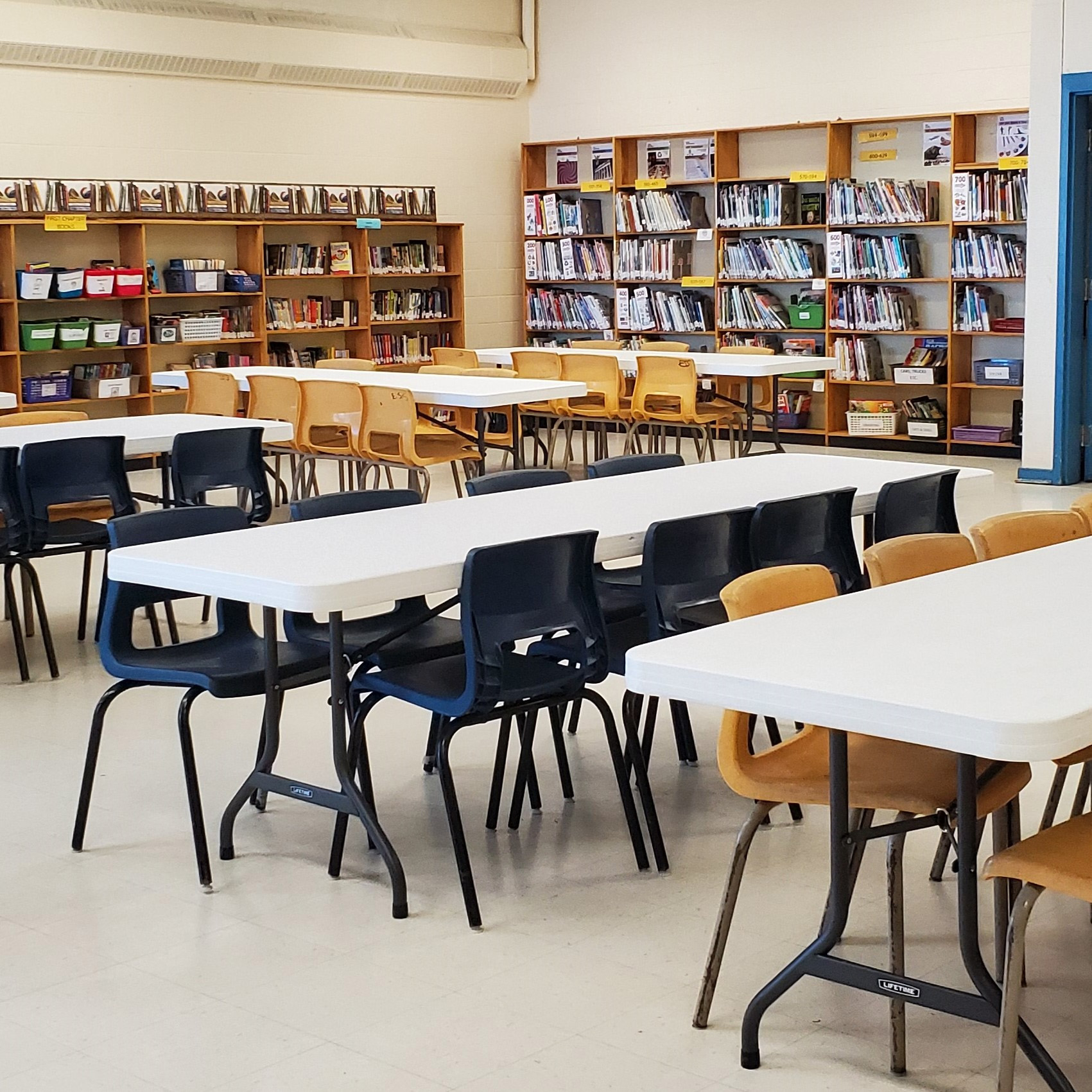
School libraries are much like HRM libraries in that they’re no longer just book storage. There is a lot of programming that takes place out of school libraries by a lot of passionate people. Librarians help kids with reading, but they also help organize programming in their schools, and they provide a refuge for kids who don’t fit in or are struggling with their academics. Council has heard extensively from a lot of librarians over the last few weeks as rumours of these negotiations have circulated. The first-hand accounts from librarians about what they do in their schools, to me, has been very compelling.
With HRM phasing out funding over five years, the future of school librarians and the extra social workers will now be decided by HRCE. The Province will have to decide whether they will allocate funding to maintain these positions or not. Given that the Province is already cutting positions elsewhere in HRCE, it seems very doubtful to me that the Province will opt to maintain library services at the current levels, especially when they would presumably have to provide the same level of enhanced service across the whole Province! I expect the outcome of Council’s decision yesterday will ultimately negatively impact our schools and our most vulnerable kids.
There is a good argument to be had that the Province should fund the social workers and librarians, not HRM. I respect my colleagues who feel on principle that this isn’t HRM’s job. For me though, I think Mark Carney said it best when he offered that we sometimes have to deal with the world as it is, not as we think it should be. I wouldn’t vote to start a program like supplemental funding if it was pitched to me today, but voting to cut something that has existed for over 30 years and that people rely on wasn’t something that I was comfortable doing, especially when the real losers here if no one in government blinks, will be the most vulnerable kids in our community. Cutting supplemental funding to save the average homeowner a cumulative total of about $20 a year in property taxes while taking on the very real and substantial risk of much worse service in HRM schools wasn’t a gamble I was willing to make. I will very much blink on this one! So I voted against. The downside risk here isn’t worth it to me, and I have no confidence that the Province will step in and properly fill the void that HRM is leaving, but I was in the minority. Council approved the new agreement 8-5.
What the supplemental funding cuts will ultimately mean in our schools remains to be seen, but Council has decided that HRM is getting out of funding school librarians and social workers. What the Province does in response… we’ll have to wait and see.

Extra Floors
I have been a bit behind over the last few weeks. I honest have been recovering from the punishing budget season (took some time off in April to recharge). I have been a bit behind on everything, including my Council blog. There are two items though from our last few meetings that are very much District 5 related that I think need some commentary, even if I’m quite late in getting there. The first is the oopsie development on Wyse Road where the developer built two more floors than the land-use bylaw allows.
As I wrote previously, the situation on Wyse Road has arisen from a combination of a fundamental misunderstanding of the land-use bylaw’s design requirements and poor judgement. The building was already under construction when HRM, in response to the housing crisis, made changes to the Centre Plan in June 2024 to allow for the development of more housing. As part of the many revisions, 169 Wyse Road, was given additional density. In response, the developer submitted a revised permit application to increase the height of the already under construction building by two floors in September 2024. The developer assumed that HRM would approve their amended permit application and with concrete already pouring on site, they didn’t wait for a response. They were already at the top of the design and they just kept going rather than incur the cost of shutting down and restarting. HRM rejected the revised permit at the start of November, but by then the extra floors were already under construction. There is no problem with the extra density that the developer has incorporated into the project, but, unfortunately, there is a problem with the building’s design.
HRM requires buildings to get slimmer as they get taller. The reason for that is wider buildings have more impact on light and wind and so the taller you go, the slimmer a building has to be. Adding two floors changed 169 Wyse Road’s classification from tall mid-rise to high-rise, which means a maximum tower width of 35 metres instead of 48 metres, as well as increased setbacks from neighbours and streets. The developer and their consultants evidently missed that adding floors would change the classification of the building and so their gamble of just going ahead with the extra two floors, assuming that they would eventually receive a revised permit, has blown up in their face: 169 Wyse Road is too wide and too close to the surrounding streets for the number of floors. The developer’s choice was to ask for a planning amendment to legalize the two extra floors or tear them off. They opted to ask Council to change the bylaw and a staff report recommending against initiating changes was before Council for consideration.
I have had a lot of people comment to me that this whole situation was just a way to force HRM into allowing two extra floors. I’m satisfied that isn’t the case. Between stop work orders and all the uncertainty, this is a ruinous situation for the developer and not an approach anyone in their right mind would look at as a good idea! Ignorance of the bylaw and bad judgement of proceeding without an approved permit though is no excuse.
I received a lot of correspondence on this from folks in the community and most people who contacted me felt that rather than destroy the already constructed floors, HRM should allow them to stay, but only if they’re 100% used for affordable housing so that the public benefits, not the developer who broke the rules. I’m sympathetic to that point of view and deferred this item when it arrived at Council so that I could further discuss with staff. Unfortunately, an elegant solution like this isn’t legally possible. HRM’s lawyers were very clear: Council can only consider the application on its planning merits. We can’t make ourselves judge and jury and implement some sort of approach that is over and above what we would require of anyone else. As a result, Council voted 16-1 (Hendsbee dissenting) against initiating a process to change the land-use bylaw to legalize the extra floors at 169 Wyse Road. The developer will have to remove the top two floors.

M District
The other big item for District 5 was the approval of the redevelopment of Mic Mac Mall (M District).
The decision to allow for a major development at Mic Mac Mall was made as part of the Centre Plan. The Centre Plan identified a number of locations throughout Halifax and Dartmouth as future growth nodes. A future growth node consists of large swathes of underutilized land, which could be significantly redeveloped. Owing to their size, future growth nodes require a secondary planning process rather than the Centre Plan’s as-of-right approach to other large single lot developments. The direction for a future growth node was set in the Centre Plan, but the exact specifics still need to be worked out through a development agreement. The future growth nodes in Dartmouth are:
- Shannon Park
- Penhorn
- Southdale (Eisners Cove)
- Dartmouth Cove (derelict industrial lots on Canal and Skokomul Street)
- Mic Mac Mall
So what was before Council was a plan for how the M District would be developed.
The M-District proposal is a bit different than other shopping centre redevelopments around HRM in that the developer is going to retain the shopping mall. The plan is to redevelop the sea of parking around the Mall into housing and add, potentially, an office building onto the existing Mall. This makes for a bit of a design challenge as it’s harder to adapt an automobile-centric mall, especially with the mall sitting in the centre of the property, into a new mixed-use community than it would be to build that same community on a completely blank site.
What staff and the developer agreed on is a plan that has the greatest density in the parking lots along the Circ. The entrance road into the Mall by the Circ will be converted into a new public street, which will follow the access roads existing route from Micmac Boulevard to the other entrance with Micmac Boulevard (Micmac Boulevard continuing after a right-angle corner makes for a weird street!). Since the developer intends to retain the Mall, parking on site will be moved underground as development proceeds. A new public park is included as part of the development between the Mall and Micmac Boulevard opposite Winners. This was a change that was made during public engagement as folks, rightly, identified the lack of public space on the site as problematic. Alternative transportation is being prioritized in the development as the developer will help fund a new multi-use trail along Micmac Boulevard and will provide space for HRM to build an expanded and improved transit terminal. The full build out of the development will take many years to complete.
At the public hearing, concerns were expressed around traffic from all the new residents. HRM did consult with the Province regarding potential impacts on the Circ and no concerns were identified. There certainly will be more traffic in the area, but I think we sometimes miss the fact that more traffic is coming regardless if the city keeps growing. Getting development into the right spots, where alternatives such as transit and active transportation have the most potential, is key to handling new growth. People don’t just stay in their own neighbourhoods. Streets in District 5 are full of people driving in from Eastern Passage, Cole Harbour, Woodlawn, Waverley etc. We know from census information that development in the core of Halifax and Dartmouth will generate fewer car trips than housing the same people out on the edge of town in suburbs where more than 90% of all trips are by car. With a major transit terminal on site and improved active transportation connections, the M District and other developments like it are actually how we best minimize the traffic impact of additional residents.
Folks also identified concerns around how the schools would accommodate additional students. Crichton Park is already too small and has portables on site. I get that is problematic! I also get that when you look around at all the new development happening in Dartmouth from Shannon Park, to Dartmouth Crossing to the M District, it seems clear that the existing schools aren’t going to be able to accommodate all the new kids. Unfortunately, Council doesn’t really get to consider schools in making decisions. Council rejected a development in Sackville in the past because of concerns that Sackville Heights Elementary was already way overcapacity with six portables on site and many classes exceeding the student cap. The Utility and Review Board ultimately overturned Council’s decision though. HRM provides HRCE with information on what development is coming and then HRCE has to plan for how they will accommodate that demand. It seems clear that HRCE is going to need a plan in Dartmouth for new or expanded schools given the increasing population!


Lastly, there was concern around recreation and green space. The M District development is big and all those new residents are going to need parks in their lives. The M District site will contain a new public park and there will be some passive spaces throughout. That said, folks are right to point out that with a fully built out population of a small town, a single new park isn’t going to be adequate. The thing is though, that the M District isn’t being built in isolation. It’s not a town by itself. It is fitting into a community that already exists. Folks who live in the M District will also use nearby park spaces around Banook and, of course, Shubie Park as well other HRM facilities like the Sportsplex. They will swim at Albro, bike down to the Harbour Trail, and walk the beach at Rainbow Haven. I get that it’s a tough sell sometimes to suggest that we all are going to have to share the spaces we love with more people, but that is the reality of life in a growing city. We can’t size every development, even the big ones, to be self-sufficient. We need to situate development where we can make the most of the spaces we already have.
I expect that the M District will, over time, mean that HRM does have to enhance nearby spaces. We might need more tennis and basketball courts, for example, at Crichton Park. Maybe the Banook Trail will need to be lit to extend its use into the evening. Perhaps the Zatzman Sportsplex will need to further extend hours. Maybe Maybank Field will have to finally get an actual official dog run. These are challenges that we will face as HRM continues to grow. There is a balance to be struck in how much we expect a new development to provide versus how much we expect it to be part of the overall community. I was happy that the revised M District proposal was modified along the way to include a public park. Without that space, I couldn’t have voted for it. But I also don’t think it’s reasonable to expect the M District to be fully self-sufficient. Ultimately, Dartmouth has a lot to gain in seeing empty parking lots turned into housing and getting the housing situated in a spot that fits our planning needs.
Council unanimously approved staff’s recommendation to approve the M District plan.
Ugh. We are building housing, but not neighbourhoods.
I disagree that one park is sufficient for the Micmac mall development. Does it need to be self-sufficient? Maybe not. But it does need to provide some meaningful quality of life – not just concrete and brick. I agree that the recreation nearby can be upgraded, but the developer should be funding that. Not the tax payer.
Residents are going to live with these decisions for a century or more. Do we want ghettos or vibrant communities?
Pingback: E- News May 2026 - Sam Austin
Putting apartment buildings along very busy highways is no way to make renting a home a viable long term housing solution for people.