

Property Assessment Cap
The major item on Council’s agenda over the last few weeks was actually something we don’t control at all, the Property Assessment Cap. While the Cap is Provincial, its effects land very squarely on the Province’s municipalities. We’re not passive observers here! And so Councillor Steele requested a staff report to review the impacts of the Cap. A report responding to her motion was back before Council.
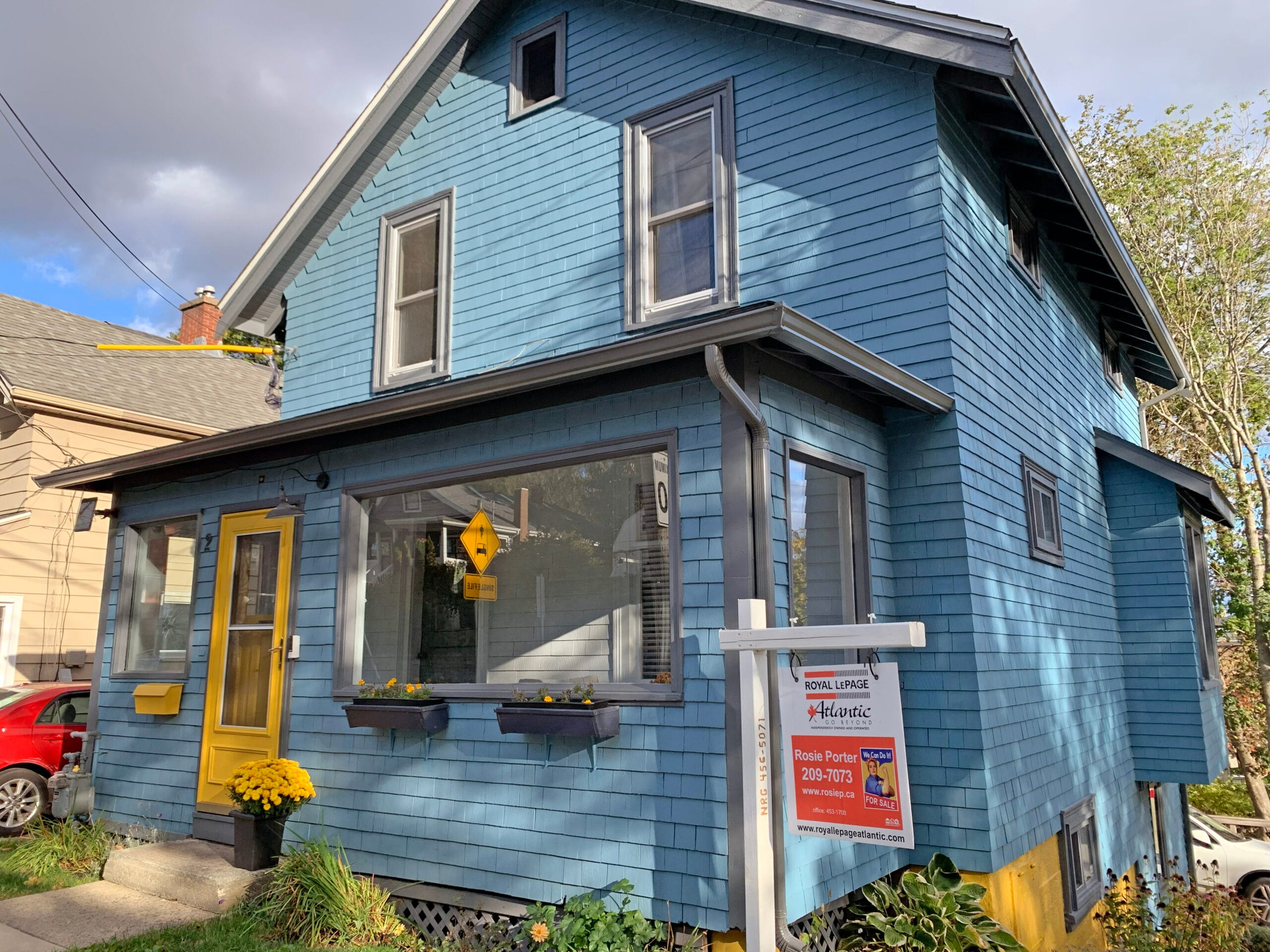
There are lot of misconceptions about how the Cap works and how it relates to HRM’s budget. The Cap applies to residential properties, with the exception of large apartment buildings. It reduces the property tax paid by long-term homeowners by limiting assessment increases each year to no more than the consumer price index (CPI). Since assessment increases have mostly exceeded CPI, over time the gap between market assessments and capped assessments has steadily increased. Cap values are adjusted based on renovations, but the only time that a property’s cap value fully resets to market is when a property is sold. The net result is that long-term homeowners are provided with more stable tax bills, but the cost of doing this is borne by renters and newcomers. The disparity is growing year by year.
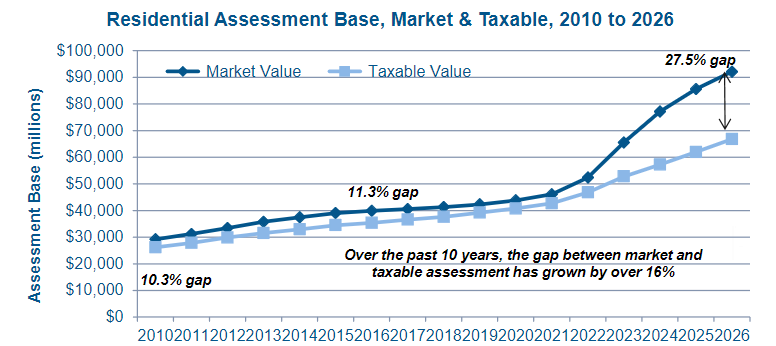
For the municipality, the Cap has no actual impact on how much money HRM receives. Long-standing requests by Nova Scotia’s municipalities for Cap reform aren’t a municipal tax grab. This is because the cost of running a municipality isn’t tied to the Cap. During HRM’s budget deliberations, Council identifies how much money is needed to pay for HRM’s operations and then a tax rate is determined by taking the assessment base (capped and uncapped properties alike) and working out what the rate needs to be to generate those funds. The actual tax rate has, in fact, mostly gone down over the years as assessments have risen more rapidly than costs. The Cap doesn’t take any money away from HRM, it just means that the municipality ends up with a higher tax rate. What the Cap does do, is it changes how the cost of generating those funds is distributed amongst taxpayers. To allow long-term homeowners to pay less, folks who rent (larger multi-unit apartment buildings being ineligible) or have recently moved pay more.
To use a personal example, my wife and I bought our house in 2010 for $265,000. With one major addition to replace an old “summer kitchen” that was literally falling off the back of our house, the assessed value today is $740,600. A neighbour on my street who moved to Dartmouth in 2023 lives in a similar sized home on an almost identical lot and has a similar assessment of $693,600. Similar homes, similar lots, on the same street, of similar value, but our tax bills are anything but similar! Because I have been on my street for 16 years, the CAP means increases in my assessment (except for the renovation value) have been limited to CPI. The result is I pay taxes on just $424,100, while my neighbour pays on $637,900! His tax bill is over $2,500 more a year than mine! There is no means testing to see if I need a tax reduction relative to my neighbour. We’re both working households, we’re about the same age, with kids, with similar properties, on the same street, receiving the same services, but I pay much less for no other reason than I have lived here longer. Is this at all fair?
Adding to the distorting impacts, the Cap itself has no Cap and applies equally to a modest duplex in Dartmouth North and to a waterfront mansion on the Northwest Arm. It also applies to all residential properties, not just primary residences, which means it includes vacation homes. Does that make sense? HRM’s analysis indicates that the Cap’s benefits disproportionately favour the wealthiest properties. There are folks who are living on limited incomes who do need help, but the Cap is such a broad policy that it provides tax reductions to many folks who don’t need it, while also raising costs on many folks who do.
So what would happen if the Cap were to disappear? Council did hear from many folks who are very fearful of such a scenario. The first thing to know is that the tax rate would drop significantly. HRM’s calculation is that rates would fall 27%! So in the urban core, that would mean rates would drop from $1.135 per $100 of assessment to $0.854 per $100 of assessment. This means that there are property owners who think they are paying less because their property is capped, but are actually paying more because the higher tax bill wipes out their savings. HRM estimates there are over 16,000 home owners in HRM that fall into this camp: folks who might think they’re saving money because of the Cap, but actually aren’t. The potential major drop in the property tax rate also means that many folks who would pay more in a no Cap scenario wouldn’t be as severely impacted as they might imagine! So to figure out what a Cap versus No Cap situation would mean for you, this is what you need to do:
| Current Tax Bill | No Cap Tax Bill |
| Your Cap Assessment / 100 X $1.135 | Your Market Assessment / 100 X $0.854 |
To go back to the example of my neighbour and I, in a no cap scenario, my yearly tax bill would go up $893 while my neighbour’s would drop by $1,240. I would pay more, but $893 is also not a doubling of my family’s bill because of the tax rate change. My neighbour on the other hand, would save money because the higher tax rate far exceeds the small Cap savings that have accumulated on his property since 2023.
So where do we go from here? What happens to the Cap isn’t a Council decision. The Cap is Provincial legislation and the politics around it are damned near impossible. The arguments to keep the Cap are simple and visceral and folks who are benefiting from the policy know it while the arguments for reform are complex and many who are on the losing side of the Cap’s distorting impacts aren’t really aware of it. The Cap is also not a direct problem for the Provincial government itself, just the Province’s municipalities. Put it altogether and its a perfect recipe for inaction and that’s what the situation has been for almost a decade.
In the late 2010s, Nova Scotia’s municipalities pushed hard for Cap reform through the Nova Scotia Federation of Municipalities and nearly got all-party consensus. Everything fell apart in the end though and the all-party committee that was formed went nowhere (see CBC here and here). HRM will provide our most findings on the Cap to all three political parties, but I don’t expect that the dynamics at Province House are going to shift towards reform anytime soon. This will remain a difficult issue and the political reality is that any provincial party that touches it, is potentially creating opportunities for their opponents to exploit. It’s kind of the worst of politics.
It’s too bad, because I think there is actually room for some reform short of phasing the Cap out entirely that could be actioned. The art of the possible! In discussions I have had with residents on this issue, most everyone has agreed that the Cap should apply to your primary residence only. Most were also in agreement that some sort of upper value threshold would make sense. These are actionable reforms that would remove some of the Cap’s most glaring inequities and capping the Cap itself would, over time, steadily lessen its distorting impacts while taking away comparatively little from people in the here and now. There are some actionable changes that could be made here by someone at the Provincial level without even having to be all that courageous.

Forum
Council directed staff to reschedule the public information meeting regarding the deregistration and demolition of the Halifax Forum. This meeting was planned for October 1 but was abruptly cancelled on September 25, catching everyone by surprise. Staff indicated that the project’s estimated costs had risen and that, as a result, staff cancelled the meeting until they could get further direction from Council.
The Forum is a registered heritage property and HRM has been working on plans to revitalize it since 2014! Unfortunately, due to constant delays by successive Councils, the building’s condition has been steadily worsening. There are so many issues with the building’s exterior that it’s really beyond saving. The revitalization plans are to tear the building down and build a new facility. The design of the new Forum borrows heavily from the architecture of the old building, which is why staff are calling the revitalization plans “Spirit of the Forum.” There is a legal process to follow on modifying or deregistered heritage properties and that will be necessary to complete before the Spirit of the Forum project can begin, which is what the cancelled meeting was about.
The Forum continues to be a hot topic with Council very narrowly divided on whether to proceed with the project or not. The main issue is the cost. When staff last presented the project to Council during budget deliberations, the estimated cost was $128 million. At that time, Council rejected the Mayor’s ask to cancel the project. Unfortunately, as final design work has been wrapping up, the project’s estimated cost has increased to around $140 million. Staff will be back to Council with the final plans and final budget numbers before Christmas.
The Mayor has been front and centre in this debate, suggesting that HRM should build a new facility elsewhere and sell the Forum lands. The Mayor has offered no details on alternative locations or partnerships. His pitched alternatives are barely a wisp of an idea. If there is anything real in the Mayor’s pitch, it will take many years to refine and develop. This means that if Council follows the Mayor’s lead, HRM will throw away the millions that have already been spent on the current plan, and will end up having to spend somewhere between $10,000,000 and $20,000,000, if not more, just to keep the old building operating for another couple of years. Meanwhile construction inflation will continue to bite and HRM will have to find and purchase an alternate site. As a result, I really don’t believe the Mayor’s pitch will amount to much, if any, savings and could very well land us right back to where we are now given that HRM has no partners and no alternative sites. The Forum debate will be coming back to Council before Christmas and I’m very nervous that Council might be about to make a penny-wise and pound-foolish decision.
No matter what Council decides to do with the Forum, the existing building is beyond saving. Which means that staff’s decision to cancel the heritage public information meeting didn’t make much sense to Council. In either scenario, the existing building is going to come down. Staff indicated that they were concerned with holding the meeting without clear direction on the project as it would be difficult to contain discussion to just the heritage process. I disagree with that caution and Councillor Hartling made the excellent point that the public information meeting might be a good way to actually dispel some of the myths that seem to surround this project, particularly the notion that heroic measures to save crumbling brick is what’s driving up the costs.
Council approved Councillor Hinch’s motion directing staff to reschedule the cancelled heritage meeting. The next debate on the Forum project will come in just a few weeks.
Argyle as a Year Round Pedestrian Street
Council is interested in making Argyle Street pedestrian only all year round. Since Argyle’s big streetscaping project, the street has been closed to vehicle traffic for most of the year. It’s only been during the winter months that vehicle traffic is allowed on Argyle Street. Last year, Councillor White requested a staff report on extending the pedestrian only time to cover the full year. As a result, HRM staff engaged with businesses and stakeholder on the street and found that there was broad support for permanent pedestrianization. The main ask from businesses was for designated loading times and Neptune Theatre had concerns around accessible drop-off for shows. In response, Council accepted a second motion from Councillor White directing staff to prepare a bylaw to make the street closure all year round, but to also return to Council with options around timing loading and unloading on the street and mitigating concerns around accessibility. I suspect this is doable, but there could be some costs to HRM.
Community Garden Grants
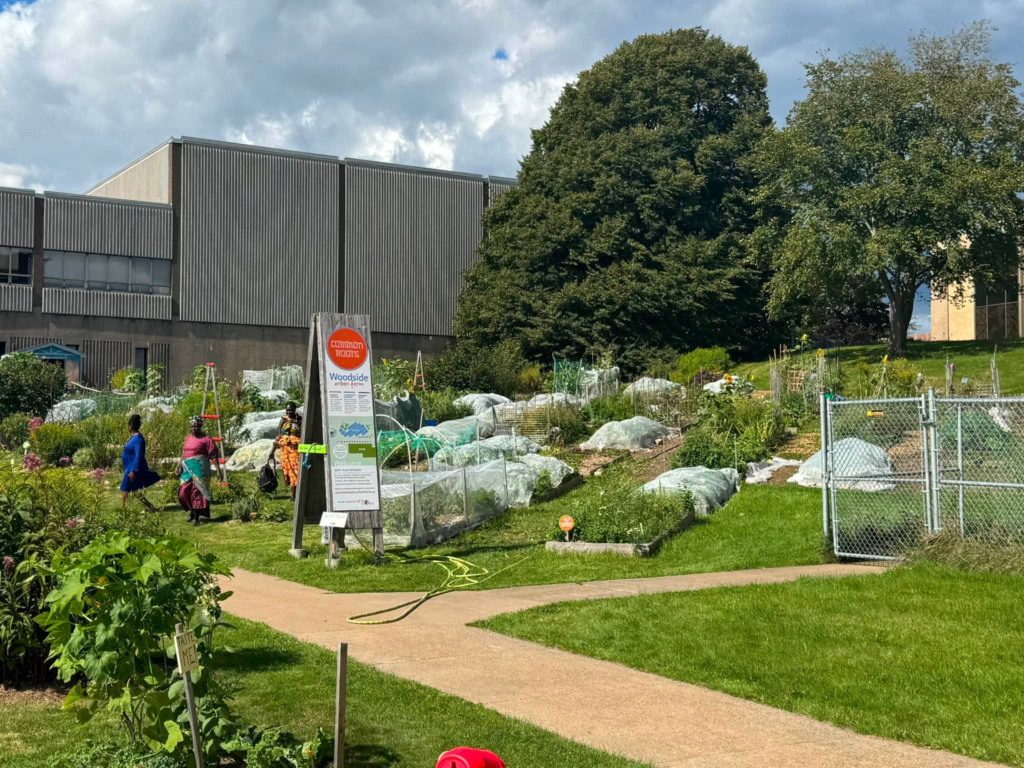
Council finalized changes to the Community Garden Grant program. HRM first established a process for residents to get permission to create community gardens in municipal parks back in 2009. As part of HRM’s JustFood Plan, the municipality created a formal grant process to provide up to $40,000 in funding to gardens throughout HRM in 2025. We’re now in year 2 of the garden grant program and Council approved some program adjustments based on the experience to date. The municipality is aligning the deadline for grants with the application deadline for new community gardens to lessen the administrative burden on people.
I suspect the really significant revision is that HRM will now allow garden groups to, with municipal approval, make more significant alterations in community gardens to accommodate projects such as green stormwater management, sheds, and water and electrical connections. The water connection piece is potentially significant. I know from talking to folks who garden in and around District 5 that the inability to connect to a water source is a frequent complaint, particularly with the dry summers that we’ve had in recent years! I expect getting a water connection will still be expensive, but it’s no longer an automatic no and could even receive funding from HRM.
Application for grants open in February, with $500 – $5,000 being a normal sort of ask, but funds potentially ranging up to $15,000 for larger projects on a case-by-case basis.
Other
- Adjusted the side lot setback requirements for high-rises in Downtown Halifax
- Requested a staff report on the administrative structure of the Mayor’s Office, specifically whether the greater independence that HRM’s previous CAO provided is working
- Requested a staff report on providing formal support for the new Mi’kmaq Native Friendship Centre’s application to the Green Municipal Fund
- Scheduled a heritage hearing to consider registering 1102 South Park Street as a heritage property
- Approved the 2026 non-profit tax relief grants
- Set an area rate in Lucasville to pay for the upcoming sidewalk project (rural areas don’t have sidewalks included in HRM’s rural rate so area rates are applied in rural centres that get sidewalks)
- Renewed and increased funding to reflect rising costs with the Business Improvement Districts in Halifax and Dartmouth to provide the Street Navigator program
- Directed staff to proceed with preparing the Parks and Outdoors Recreation Facilities Plan
- Approved revised figures for the closed 2025-2026 fiscal year
- Appointed Councillor Jean St. Amand to serve as one of HRM’s two representatives on the Nova Scotia Federation of Canadian Municipalities Board (I’m the other representative from HRM)
- Scheduled a public hearing to consider amendments to the Centre Plan for side and rear year setback requirements in Downtown Halifax
- Approved amendments to the User Fee Bylaw to reflect an increased fee for Property Information Requests that Council previously directed as part of this year’s budget
- Reviewed Halifax Water’s 2025-2026 report to Council
- Scheduled a public hearing to consider rezoning 63 Jackson Road to higher-order residential (same as the its neighbourhing corner lot) to enable a 5 storey apartment building
- Approved names for 19 private roads
- Gave first reading to change the nuisance bylaw to including provisions around exterior lighting
- Scheduled a public hearing to consider registering 1717 Brunswick Street as a heritage property
- Requested a staff report on getting a population survey of deer in HRM, and managing traffic around construction sites